
Is There a Warren County Warrant Search Portal?
Here is the honest answer. No official countywide active-warrant search or most-wanted list was found in Warren County's public pages. The County Court does link officer forms, like an after-hours warrant request packet and a misdemeanor complaint form. Those show that warrants move through the court and law enforcement workflow. They are not a public warrant lookup. So you cannot type a name into one county tool and get every open warrant.
That does not mean you are stuck. Warrant clues show up on court dockets, where a case may list a warrant, a capias, a failure to appear, or a probation violation. The clerk and the sheriff can also help confirm status. The honest path is to check the right court first, then call the office that holds the case.
It helps to know who does what. A judge or grand jury issues a warrant. The clerk records it on the case file. The sheriff or local police serve it. The prosecutor drives the felony charge behind it. No single office posts every open order for the public to browse. So a Warren County warrant search means touching more than one source. Start where the case lives, then work outward to custody and law enforcement.
| Search Field | Status / Notes |
|---|---|
| Countywide active-warrant portal | None located in official Warren County pages. |
| Court docket search | Use Common Pleas Benchmark for felony and common pleas cases. |
| County and municipal court check | Use the court named on the citation or notice. |
| Clerk or sheriff contact | Call to ask about warrant status, bond, and court date. |
| Attorney | Best route for felony, domestic violence, or out-of-county warrants. |
Note: Some warrant data stays restricted when a warrant is sealed or tied to an active investigation, so not every order is public.
How to Check for a Warren County Warrant
Because there is no single portal, you work the sources one at a time. Start with the court that likely holds the case. Felony and larger matters sit in the Court of Common Pleas, searchable through the Clerk's Benchmark case system. Misdemeanor and traffic matters run through Warren County Court or a municipal court. The docket may show a warrant or capias entry, a bond, a failure to appear, or a hearing date. The sheriff can tell you whether a person is currently in custody.
The Sheriff's Office is the natural place to start for custody and warrant questions. The homepage links jail information, records requests, and citizen resources.
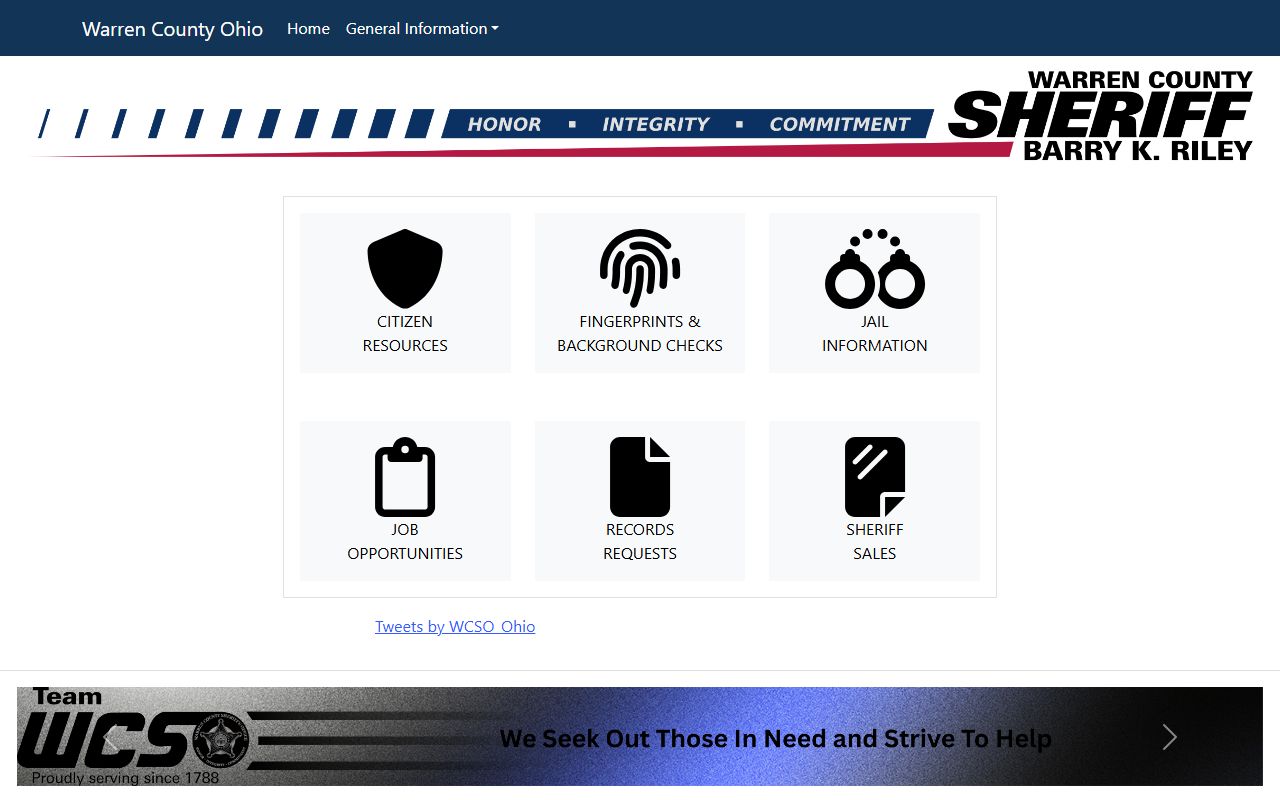
The Warren County Sheriff's Office homepage links the tools you need to start a Warren County warrant check, including jail and records pages.
The Sheriff's citizen resources page adds a report lookup field and victim-rights material that can help during a warrant or case question.
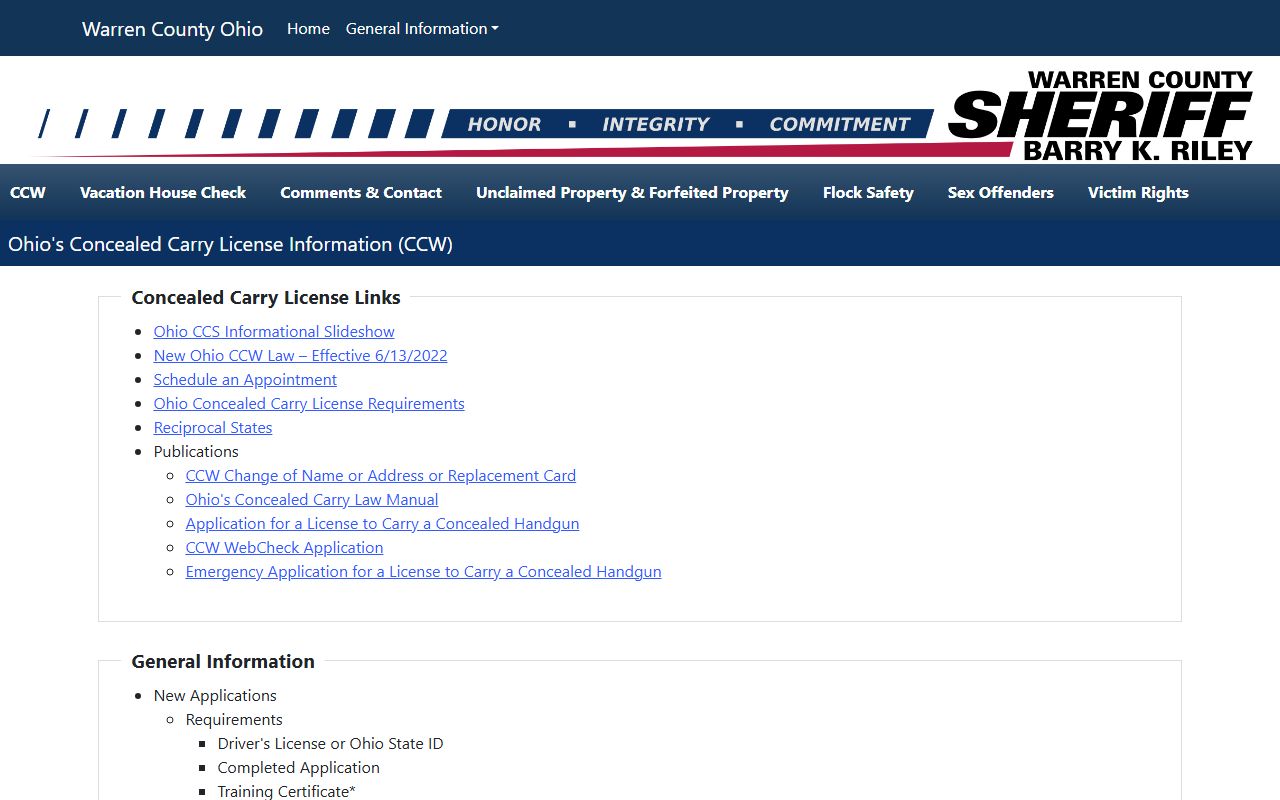
The Sheriff citizen resources page includes a report lookup and Marsy's Law victim material tied to county cases.
Types of Warrants in Warren County
Not all warrants are the same. The kind of warrant tells you who issued it and why. Some come from a judge. Some follow a missed court date. Some are sealed during an investigation. Knowing the type helps you find the right court and the right fix. Below are the warrant types seen in Ohio and on local dockets.
- Arrest warrant
- Issued after a complaint, indictment, or probable-cause finding to arrest a named person.
- Bench warrant
- Issued by a judge from the bench, often for a missed court date, contempt, or a violated order.
- Capias
- An Ohio docket term for an order to take a defendant into custody, often after a failure to appear or comply.
- Search warrant
- Authorizes a search of a place or item, and is often sealed while an investigation is active.
- Probation violation warrant
- Issued after an alleged violation of community control or probation terms.
- Civil warrant or body attachment
- May arise in contempt, support, or judgment matters under strict procedural rules.
A capias is the term you will most often see on a Warren County criminal docket after someone misses a date. It carries the same weight as an arrest order.
How Warrants Appear on Court Records
There is no verified public sample of a Warren County warrant listing, so we will not invent one. What you can rely on is the court docket. A criminal case file in Warren County records its events as docket entries. Several of those entries point to warrant activity. Reading them in order tells you whether an order is open, recalled, or resolved.
These are docket entry types that signal warrant or custody activity in a Warren County case:
- Warrant or capias - the court issued an order to take the person into custody.
- Failure to appear - the person missed a court date, which often triggers a warrant.
- Bond - the amount or condition set, which can affect release.
- Probation violation - an alleged breach of supervision that may bring a hold.
- Hearing scheduled - a date set to address the matter.
- Release - an entry showing custody ended or a warrant was recalled.
Note: A docket may show a warrant was issued without showing it was cleared, so always read to the latest entry and confirm status with the court.
How to Resolve an Outstanding Warrant
An open warrant does not go away on its own. The smart move is to act, and to act with the right court. The sheriff carries out warrants, but the issuing court controls the case. Rushing in without a plan can backfire. Take these steps in order, and get counsel where the matter is serious.
- Identify the issuing court from your paperwork, docket, citation, police contact, or attorney.
- Check the right docket. Use Common Pleas Benchmark for felony or common pleas cases, and the county or municipal court for traffic or misdemeanor cases.
- Call the clerk or court to ask about warrant status, bond, the court date, and whether a walk-in hearing or warrant recall motion is allowed.
- Consult counsel, especially for felony, domestic violence, probation violation, or out-of-county warrants.
- If bond is allowed, confirm the amount, the accepted payment, and where to post it. Do not assume an online payment clears the warrant at once.
- Appear as instructed. Bring ID, the case number, proof of payment or compliance, and your attorney information.
- After it is resolved, verify the docket updates and ask how long warrant clearance takes in law-enforcement systems.
Note: A warrant from another county, another state, or a federal agency can keep a person in custody even when local charges look minor, so always check for holds.
The Prosecutor and Warrant Workflow
The County Prosecutor sits at the center of the criminal side. The office handles felony cases and works with law enforcement on charges that can lead to a warrant. Understanding the prosecutor's role helps you see where a warrant fits in the larger case. The office is split into a Criminal Division and a Civil Division.
The Warren County Prosecutor publishes its mission, news, and division pages on its main site.
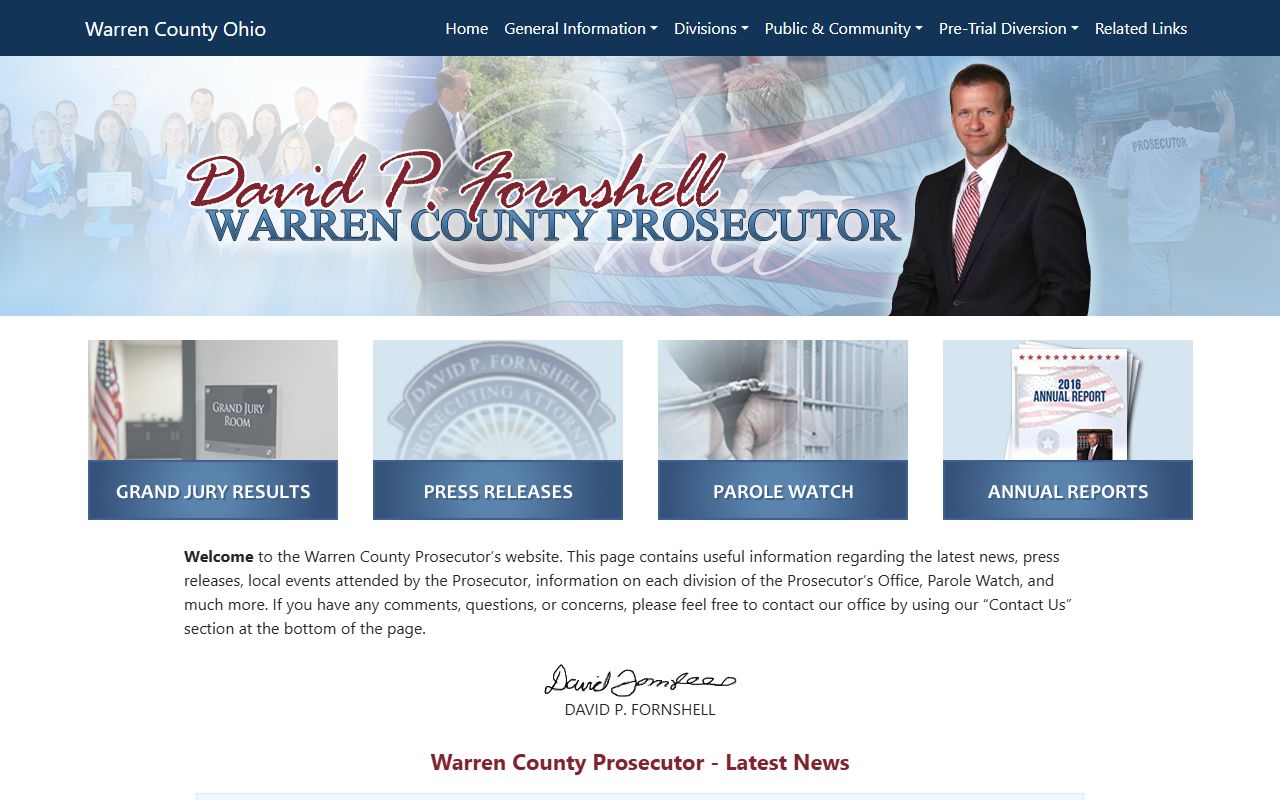
The Warren County Prosecutor homepage outlines the office that brings felony charges that may carry warrants in county cases.
The Criminal Division is the part that prosecutes felonies in the Court of Common Pleas and defends convictions on appeal.
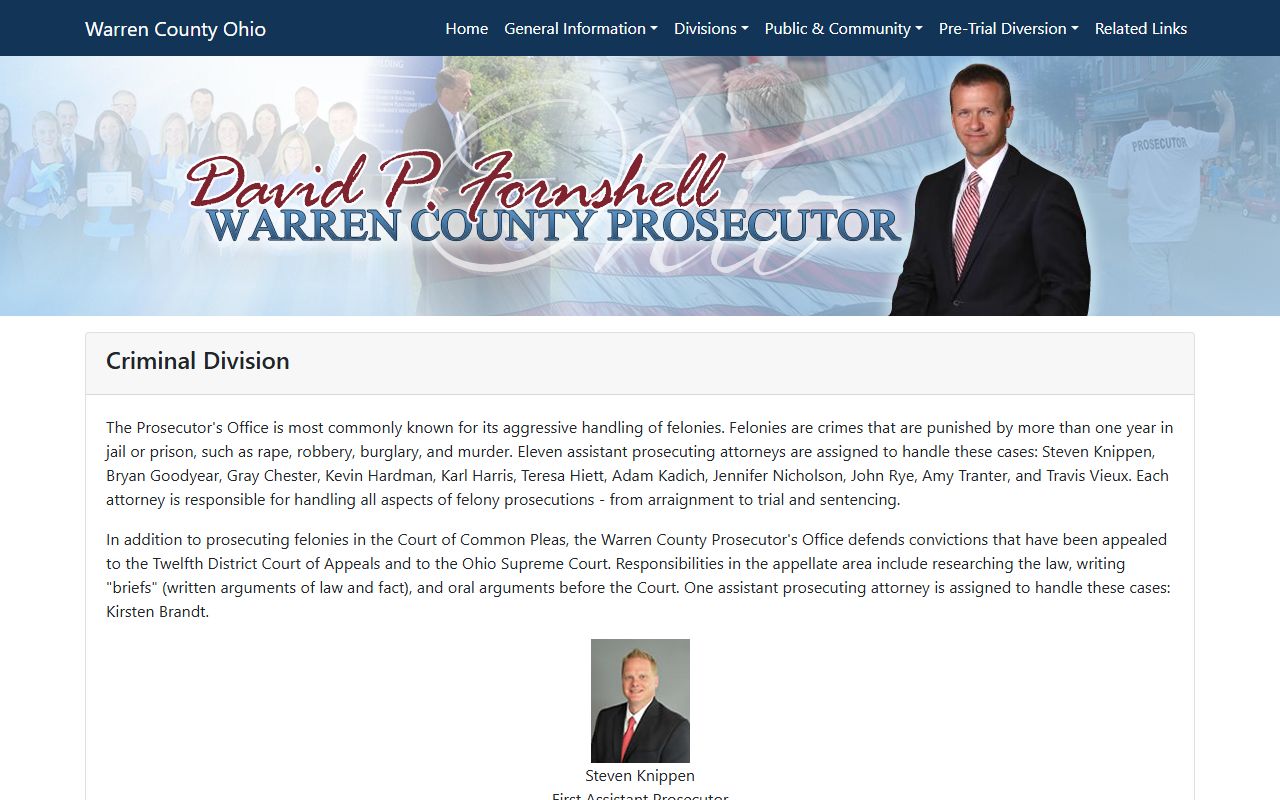
The Prosecutor Criminal Division page explains the felony work that ties to many Warren County arrest warrants.
The Criminal Division is known for felony work. It prosecutes felonies in the Court of Common Pleas, and it defends convictions when a case is appealed to the Twelfth District Court of Appeals or the Ohio Supreme Court. Felonies are crimes that can bring more than one year in jail or prison. So when a felony warrant ties to a Warren County case, the Criminal Division is the office moving it forward. The Sheriff then serves the warrant and brings the person before the court.
The Civil Division handles a different job. It advises county departments, townships, and libraries on legal matters.
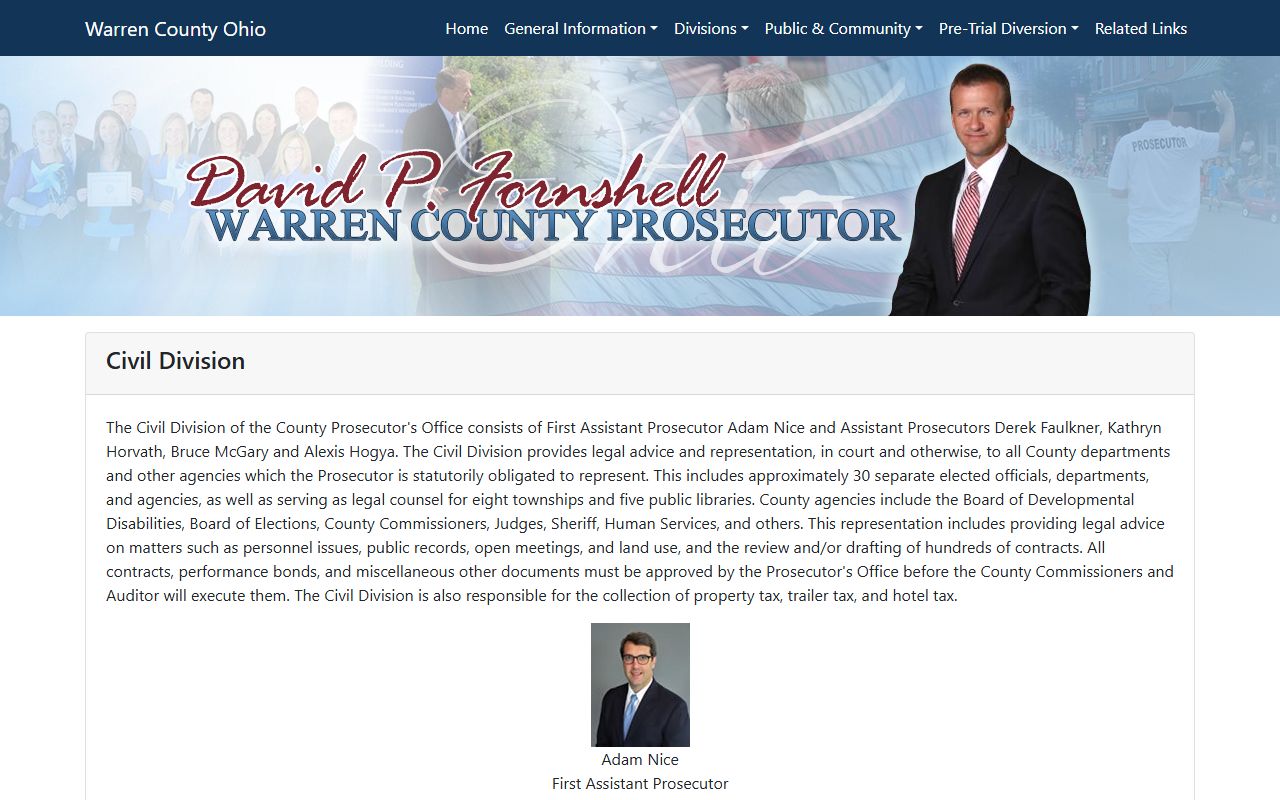
The Prosecutor Civil Division page covers the office's work for county agencies, which sits apart from criminal warrant cases.