
How to Look Up Warren County Jail Population Data
The live count comes from one place. Warren County's current-custody data sits on the Miami Valley Jails provider page, the same portal used to find a person in custody. You can open it at the persons in custody portal. The page opens with a provider table that lists the jail code, the jail name, the current population, the jail phone, how often the data updates, and the last update time. That population field is the figure most people mean when they ask about the jail count.
Read it as a snapshot, not an average. At inspection, the provider table showed 285 people in the Warren County Jail. That figure carried the timestamp of 5/25/2026 at 11:32 PM, and the table noted that the data refreshes every 30 minutes. So the count is close to live, but it is a point-in-time roster count, not the official average daily population. Two checks an hour apart can differ.
The Sheriff's Office does not publish a separate open-data dashboard with trends, demographics, or capacity in the pages reviewed. For broader trends, you turn to state and national research bodies, which are covered further down. For an individual name search, the population page is not the right tool. That belongs to the roster search under inmate records.
Warren County Jail Capacity Overview
Capacity and population are two different numbers. Capacity is how many beds a jail is rated to hold. Population is how many people sit in it at a given moment. The roster count answers the second question. It does not answer the first. The official rated capacity for the Warren County Jail was not located in the county sheriff pages reviewed for this build. So the table below shows the facility and its known roster count, and it marks capacity as not officially located.
| Facility | Address | Rated Capacity | Roster Count at Inspection |
|---|---|---|---|
| Warren County Jail | 822 Memorial Drive, Lebanon, OH 45036 | Not officially located | 285 on 5/25/2026 at 11:32 PM |
Because the rated capacity is not confirmed, no claim about the jail being over or under capacity belongs here. That would be a guess. A jail can also run with an operational capacity below its rated bed count. Classification, medical isolation, staffing, and housing-unit maintenance all shrink usable beds. So even a known bed count would not settle whether the jail is full. The honest answer is that capacity needs an official source the county has not posted publicly.
Note: The 285 figure is the roster count shown at one inspection, not a rated capacity and not an average, so it should not be read as proof the jail is near or over its limit.
Average Daily Population
Average daily population, or ADP, is a different measure from a roster snapshot. ADP is figured over a period, such as a month or a year. It smooths out the daily swings that a single count cannot. A jail that shows 285 at one midnight could average more or fewer over a full year. The two numbers answer different questions.
The official five-year Warren County jail ADP was not found in the sources reviewed. So this page will not present a Warren-specific ADP figure or trend chart. That would mean inventing data, which helps no one. What can be said is how ADP works and why it matters. When a research body reports an ADP, it should state the time period and the method behind it. Without that, two ADP figures are not comparable.
If you need a defensible county trend, the path is to pull it from an official county report or a high-authority research source, not from a single roster reading. The national and state context below points to those sources.
Demographic Breakdown
Many people want to know the makeup of the jail population. That means the split by gender, age, and race. Those breakdowns are sensitive, and they are often not published at the local level. For Warren County, a male and female split, an age breakdown, and a race breakdown were not located in the official sheriff pages reviewed. So this page does not present local demographic percentages. Numbers that are not sourced do not go here.
Where local detail is missing, statewide and national context can stand in, as long as it is clearly labeled as not county-specific. The Prison Policy Initiative keeps an Ohio profile with state-level incarceration context and visual summaries. You can view it at the Prison Policy Initiative Ohio profile. The image below shows that state profile.
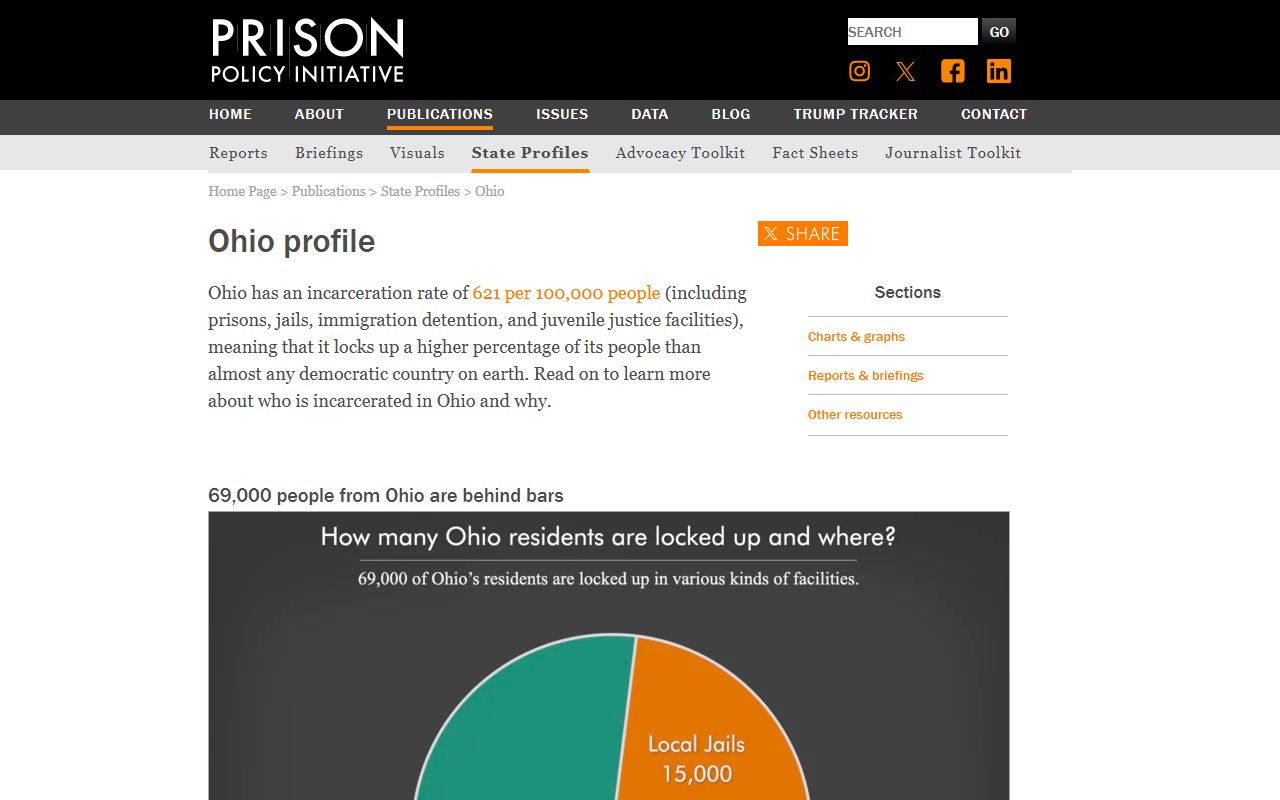
That profile is a state view, not a Warren County operational report. Use it to understand Ohio patterns, then treat any Warren County figure with care unless an official county source confirms it. For local population scale, the U.S. Census QuickFacts page for Warren County gives the resident count that rate math depends on. You can open it at the Census QuickFacts page for Warren County. The screenshot below shows that page.
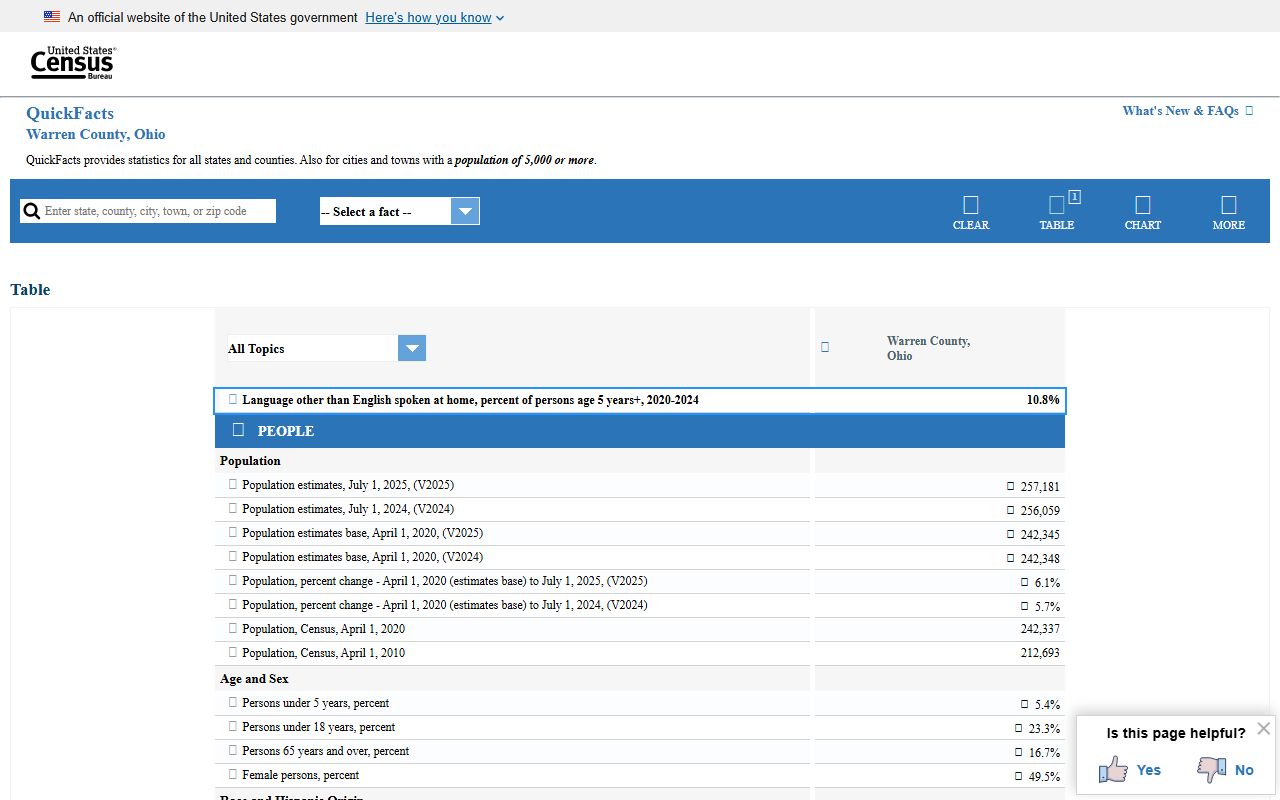
Census data is the denominator for any per-100,000 rate. The county resident count lets you turn a raw jail number into a rate you can compare to the state and the nation.
Pretrial vs Sentenced Population
Not everyone in a county jail has been convicted. This point matters, and it gets missed a lot. County jails usually hold a mix of people in different stages. Calling everyone in the jail a convict is wrong. The status of each person shapes which court records apply to them.
The comparison below lays out the two broad groups a county jail typically holds. The exact Warren County split between pretrial and sentenced people was not published in the sources reviewed, so these are general categories, not local percentages.
| Status | Who They Are | Record Path |
|---|---|---|
| Pretrial | People held while their case is still open, often awaiting trial or a hearing, sometimes held on a warrant or a hold. | Active court docket with bond, hearings, and pending charges. |
| Sentenced | People serving a short local sentence after a conviction, or awaiting transfer to an Ohio prison. | Closed or sentencing-phase docket, possible transfer to state custody. |
A jail can also hold people awaiting transfer and people on state or federal holds. So the picture is rarely simple. A pretrial person is presumed innocent and may be released on bond at any time. A sentenced person follows a different path that may end in a prison transfer. To follow either path, the court docket tells more than the roster. See court records for case-level detail.
Misdemeanor vs Felony Population
Charge level is another way the population splits. Felony, misdemeanor, probation violation, traffic, and warrant holds all send a case down a different court path. The Warren County percentages for each charge type were not published in the official sources reviewed. So this section explains the categories rather than fixing a local share to each.
Felony cases generally route to the Court of Common Pleas after an initial appearance and a grand jury step. Misdemeanor and traffic cases tend to stay in a municipal court, the County Court, or a mayor's court, depending on where the offense happened. A probation or community-control violation can put someone back in jail on a hold even when the original charge looked minor. A warrant from another county, another state, or a federal agency can keep a person in custody as well.
The short list below sorts the common charge types by the usual court path.
- Felony charges: Court of Common Pleas after a lower-court appearance.
- Misdemeanor charges: municipal court, County Court, or mayor's court.
- Traffic offenses: municipal or county traffic dockets.
- Probation or community-control violations: the sentencing court.
- Warrant or out-of-jurisdiction holds: the issuing court or agency.
Mental Health and Medical Population
A share of any jail population needs mental health or medical care. People held in jail may need medication, withdrawal management, or treatment for chronic conditions. These needs affect housing, since medical isolation and special units take beds out of general use. That is one reason operational capacity can sit below the rated bed count.
Warren County does not publish a mental-health or medical population count in the sources reviewed. So no local figure appears here. What can be said is that these needs shape how a jail uses its space and staff. The county also runs specialty court tracks, such as a recovery court and a veterans honor court at the Common Pleas level, which aim to route some people toward treatment instead of long custody. Those programs sit on the court side, not the jail population report, but they connect to who ends up held and for how long.
National and State Context
When local numbers are thin, national research fills part of the gap. The Bureau of Justice Statistics, part of the U.S. Department of Justice, publishes national jail population reports and the standard definitions the field uses. You can reach it at the Bureau of Justice Statistics site. The image below shows that source.
BJS data is national and state context, not a Warren County operational report. It is the right place for terms like ADP and for how the country's jail population trends over time. Treat it as background, then keep county claims tied to county sources.
Comparing a county to a state and to the nation is most fair as a rate per 100,000 residents, not as a raw count. A raw count of 285 means little without the population behind it. The block below frames how to compare the three levels honestly.
County vs state vs national framing. A raw jail count cannot be compared across places of different size. Turn it into a rate per 100,000 residents using Census population data, then line it up against the Ohio rate from state sources and the national rate from BJS. Warren County's own rate per 100,000 was not published in the sources reviewed, so it should be computed from an official county count and Census data rather than guessed. Always label which figure is county, which is state, and which is national.
The Vera Institute Incarceration Trends project also publishes county-level jail and prison data and is a high-authority research source. Verify its current Warren County page before citing a specific figure, since it is a research project and not a county-operated report.
Population Trends Over Time
Trend talk needs sourced numbers. An official five-year Warren County jail ADP trend was not found in this pass. So this page does not present a local trend line or attribute any change to a cause. It is fair to say the official Warren County five-year ADP was not located. It is not fair to blame a rise or a fall on a policy, a virus, or a prosecutor without a source.
The terms below help read any trend data you do find, whether it comes from BJS, Vera, or a county report. Knowing them keeps a comparison honest.
- Roster count
- The number of people in custody at one moment, shown on the live provider page and updated on a set cycle.
- Average daily population
- The mean number in custody across a defined period, such as a month or a year, used for trends.
- Rated capacity
- The number of beds a jail is officially rated to hold, which can differ from the beds it can actually use.
- Rate per 100,000
- A count adjusted for population size, which lets you compare a county to a state or the nation.
Used with those definitions, even partial data can support a careful read. The key is to match each number to the right term and the right time period.
Searching by Name in Warren County
This page is about population data, not individual lookups. For a single person, the population figures will not help. Name searches run through the live custody roster instead. You can find that tool and the step-by-step search method under inmate records, which covers how to use the portal and what a profile shows.
Where the Warren County Population Data Comes From
It helps to know which number came from where. The live roster count comes from the Miami Valley Jails provider page that the Sheriff's Office links for current custody. The county resident count for rate math comes from the U.S. Census QuickFacts page. National definitions and jail trends come from the Bureau of Justice Statistics. State context comes from the Prison Policy Initiative Ohio profile and, with verification, the Vera Institute.
Keep the sources sorted by level. County data answers county questions. State and national data give context only, and they should never be passed off as a Warren County figure. Where an official county number was not published, this page says so plainly rather than filling the gap with a guess. For case-level detail behind the counts, see court records. For people who have left custody and where they go next, see released inmates. And for the charge history that feeds many bookings, see arrest records.
Note: County-specific figures on this page are limited to the roster count at one inspection, and all state or national numbers are context that must stay labeled as such.